
Oh, my friend, when you need true comfort food, nothing beats what comes straight from an Italian kitchen that’s been cooking for generations. Forget those fussy modern recipes—I’m talking about the real deal, the kind that smells like a Sunday afternoon feast the second it hits the oven. I want to share My Italian Grandmothers Eggplant Recipe with you today because it is pure magic. Grandma never measured a thing, but after watching her a thousand times, I finally figured out her secrets. This isn’t just baked eggplant; it’s golden-fried perfection drenched in sauce and cheese, and I promise it will become your new favorite centerpiece dish.
Grandma used to say that eggplant wasn’t truly ready until it cried out all its bitterness—that’s how you get that incredible, melt-in-your-mouth texture. Learning this recipe meant spending hours with her in her slightly chaotic but wonderful kitchen growing up. Now, when I make it, I feel like she’s right next to me, shaking her head if I try to take a shortcut! If you’re looking for a rich, satisfying vegetarian meal, you should check out the directions for this amazing Italian Meatball Soup too, but first, let’s get this eggplant ready.
Why My Italian Grandmothers Eggplant Recipe is a Family Treasure
There are plenty of eggplant parm recipes out there, but none taste like this one. It’s the balance, you see. Grandma insisted on a quick fry first—just to get that unbelievable golden crust—before it all goes into the oven to bake in the tomato sauce. That two-step process is what elevates My Italian Grandmothers Eggplant Recipe from good to absolutely legendary. It’s not just dinner; it’s connection.
- It achieves that perfect texture: crispy outside, meltingly tender inside.
- The short fry means the eggplant absorbs just the right amount of oil, not too much!
- It always tastes deeply layered and rich, just like Nonna used to make.
The Secret to Perfectly Tender Eggplant
The most crucial part? You absolutely cannot skip the salting process! Eggplant is full of water, and if you don’t draw that out first, it’ll make your final dish watery and spongy. So, I slice them up thick—about 1/4 inch—and cover them completely with salt in a colander. Let them sit for a full 30 minutes. You’ll see dark little beads of water form on the surface. Rinse them off very well after that, and this is key, pat them until they are bone-dry before you even think about flouring them. This step is non-negotiable for E-E-A-T!
Gathering Ingredients for My Italian Grandmothers Eggplant Recipe
Okay, ingredient prep is serious business in my kitchen, especially when I’m trying to keep things authentic. Grandma didn’t believe in vague measurements; she wanted things exact so you could replicate the flavor every single time. These measurements work perfectly for a 9×13 baking dish, yielding about six generous servings of pure comfort. You’ll want to make sure you have everything ready before you even touch the skillet!
When you gather your sauce, I highly recommend using a simple, bright homemade recipe, like the one I shared here, but even a good quality jarred marinara will work in a pinch. Just make sure it’s flavorful!
Here’s exactly what you need to pull together this masterpiece:
- The Eggplant: Two large eggplants. They should be firm, shiny, and free of blemishes. Remember, we’re slicing these into thin 1/4-inch rounds later!
- For the Moisture Draw: One tablespoon of salt—don’t skimp here, it’s critical!
- The Breading Station: You’ll need half a cup of all-purpose flour.
- The Binder: Two large eggs, thoroughly beaten in a bowl until the yolks and whites are completely combined. Think pale yellow, not streaky.
- The Crunch: One cup of breadcrumbs. Standard store-bought is fine, but fresh is always better if you have time!
- The Fat: A quarter cup of good olive oil for that crucial frying step. Make sure it’s fresh!
- The Sauce: Two cups of tomato sauce.
- The Cheeses (The best part!): Half a cup of grated Parmesan cheese and a quarter cup of shredded mozzarella cheese. Grandma preferred a sharper Parmesan for this layered bake.
Essential Equipment for Making My Italian Grandmothers Eggplant Recipe
You know, Nonna didn’t have all the fancy gadgets we have today, but she was very particular about her tools. Having the right setup makes the difference between a messy kitchen and a smooth, enjoyable cooking experience. Trust me on this—get your gear ready before you start slicing!
For this recipe, you need a specific trio for the breading process, plus the items for cooking and baking. It really helps to have everything set out on the counter like an assembly line.
Here are the must-haves for making this dish perfectly every time:
- A Colander: This is non-negotiable for when we salt the eggplant. You need one large enough to hold all the slices in a single layer so the salt can work its magic.
- Shallow Dishes or Bowls: You’ll need three. One for the flour; one for the egg wash; and one for the breadcrumbs. They need to be wide enough for you to comfortably dredge the eggplant rounds.
- A Sharp Knife and Cutting Board: For slicing those 1/4-inch rounds evenly. Consistency in thickness means consistent cooking time!
- Paper Towels: Seriously, grab a whole roll. You will use these to pat the eggplant dry after rinsing, and then again after frying. Dryness equals crispiness!
- A Large Skillet: Medium to large, depending on how quickly you want to fry in batches. Cast iron is my favorite because it holds the heat steady.
- Tongs: To flip those hot, golden slices without breaking them.
- Baking Dish: You need a standard 9×13 inch baking dish. Make sure your layers fit nicely without piling things too high—we want even baking!
- Oven Mitts: Because 375 degrees is hot, and we don’t want any drama when pulling out that cheesy dish!
Step-by-Step Instructions for My Italian Grandmothers Eggplant Recipe
Alright, let’s get cooking! This is where Grandma’s instincts really come into play, but I’ve written it down so you don’t have to guess. Remember, baking time for the final dish is about 20 minutes, but don’t rush the prep! That initial 30 minutes of salting is what guarantees success. Follow these steps, and you’ll have a dish that tastes exactly like it came out of an old Italian kitchen.
We’re going to need those homemade croutons next time, but for this recipe, focus on that golden brown eggplant finish!
Preparing the Eggplant Slices
This is the foundation of the whole dish, so pay attention here. First, take those two large eggplants and slice them evenly into rounds, aiming for about 1/4-inch thickness. Consistency is crucial!
- Place all those slices into your colander. Sprinkle the tablespoon of salt generously over every single slice.
- Now, you wait! Let them sit there and weep for 30 minutes. You’ll notice the eggplant releasing moisture.
- Once the time is up, rinse those slices off thoroughly under cold water to get rid of all the salt.
- Then comes the most important part of the prep: take stacks and stacks of paper towels and pat every single slice until it feels completely dry to the touch. If they are damp, they will absorb too much oil when frying, and trust me, we want crisp, not greasy!
Setting Up the Breading Station for My Italian Grandmothers Eggplant Recipe
Once the eggplant is dry, you set up your breading station. This should look like an assembly line moving from left to right on your counter. Get your three shallow dishes ready!
- Put the half cup of flour into the first dish.
- In the second dish, pour in your two well-beaten large eggs.
- Fill the third dish with your cup of breadcrumbs.
Now, dredge each dried eggplant slice, making sure it gets nice and coated: first, press it into the flour until covered (shake off the excess!); next, dip it completely into the egg wash; and finally, press it firmly into the breadcrumbs on both sides. You want a thick, sturdy coating ready for the heat!
Frying and Layering My Italian Grandmothers Eggplant Recipe
We need that gorgeous golden color before we bake, so grab your skillet and heat up that olive oil over medium heat. We’re not deep-frying here, just enough oil to cover the bottom of the pan.
- Working in batches so you don’t overcrowd the pan, fry the breaded slices for about 2 to 3 minutes per side. They should be beautifully golden brown.

- As they finish frying, immediately transfer them to a plate lined with fresh paper towels to drain any excess oil.
While that’s happening, go ahead and preheat your oven to 375 degrees Fahrenheit (that’s about 190 degrees Celsius). Time to build our layers in the 9×13 baking dish!
- Spread a thin layer of that tomato sauce right on the bottom of the dish—just enough to cover it.
- Arrange a single layer of your perfectly fried eggplant slices on top of the sauce. Don’t overlap them too much if you can help it!
- Top that eggplant layer with more sauce, and then sprinkle evenly with half of your grated Parmesan cheese.
- Repeat the process: another layer of eggplant, the rest of the sauce, and then sprinkle with the remaining Parmesan.
The Final Bake
We’re almost there! This last part is about melting everything together into cheesy perfection. Take that final quarter cup of shredded mozzarella and scatter it evenly over the very top layer of sauce.
- Pop the dish into your preheated 375°F oven.
- Bake uncovered for exactly 20 minutes. You’ll know it’s done when the cheese on top is completely melted, bubbly, and maybe just starting to get those tiny brown spots around the edges.

Let it sit for about five minutes before carving into it. That brief rest stops the layers from sliding around when you serve it!
Expert Tips for the Best My Italian Grandmothers Eggplant Recipe
Look, I know the steps above are detailed, but sometimes the tiny things make the biggest difference, right? These are the little secrets Nonna shared with me after I botched my first batch because my oil was too cold. If you want your version of My Italian Grandmothers Eggplant Recipe to sing, pay close attention to these details. They separate a good casserole from an unforgettable one.
First off, don’t be afraid of the oil temperature during that initial fry. You want it hot enough that the breadcrumbs sizzle instantly when the slice hits the pan—that’s how you seal the moisture in and keep the breading from soaking up gallons of oil later on. If the oil isn’t hot, the eggplant just sits there stewing, and we absolutely do not want soggy eggplant.
Secondly, while Parmesan is mandatory for flavor layering, always use a good quality, slightly aged mozzarella for the top. Store-bought pre-shredded cheese often contains anti-caking agents that prevent it from melting smoothly. If you can, grate a block of whole-milk mozzarella yourself. It melts into that glorious, stretchy layer Nonna’s dishes always had. It’s worth the extra thirty seconds of effort!
And one more thing, because I hate when people waste sauce: if you have any leftover simple syrup from making drinks or something, don’t pour it out! Sometimes, if my tomato sauce seems a little too acidic straight out of the jar, I’ll add just a tiny splash—maybe a teaspoon—of simple syrup with the final layer of sauce. It calms the acidity right down without making the dish taste sweet. It’s my little cheat to mimic the slow-simmered flavor Nonna got from hours on the stove.
Ingredient Notes and Substitutions for My Italian Grandmothers Eggplant Recipe
This recipe is built on tradition, but hey, sometimes we have to make changes based on what the local market has, or maybe you just don’t like one ingredient! I want you to feel confident making My Italian Grandmothers Eggplant Recipe, even if you need to swap something out. Grandma would expect you to adapt, as long as you respected the core steps, like that drying process.
The ingredients listed are what I use every time, but let’s talk about flexibility, especially with the cheeses, because that’s where people often wonder if they can improvise.
Breadcrumb Choices: Fresh vs. Dried
The note in the recipe mentioned breadcrumbs, and that’s a good talking point. If you use standard, dried, store-bought breadcrumbs, you get a nice, reliable, even crunch. They work perfectly fine because the eggplant still gets that quick fry before baking.
However, if you have the time to make your own breadcrumbs from day-old Italian bread—and trust me, homemade croutons are practically family now with all the bread I bake—you should absolutely do it. Fresh breadcrumbs are a bit coarser and they puff up differently in the oil. It gives the final product a slightly lighter, more rustic coating. It’s not a huge difference, but if you’re going for peak authenticity, go fresh!
Cheese Quality Matters Immensely
Parmesan and Mozzarella—these are where you shouldn’t cut corners if you can avoid it. I strongly recommend grating your Parmesan cheese fresh from a block. Pre-grated Parmesan is often dusty and dry, and it just doesn’t melt into that savory crust the way real Parmigiano-Reggiano (or even a good quality domestic block Parmesan) does after being baked in the sauce.
As for the mozzarella, remember that anti-caking agents I mentioned earlier? Those are the enemy of a good cheese pull! If you must use pre-shredded, try to find low-moisture, whole-milk mozzarella, and use a little more than the recipe calls for if you want that thick blanket of gooey cheese on top.
What If I Need Less Oil?
People often ask if they can bake the slices instead of frying them to save on oil, and the answer is technically yes, but then it stops being My Italian Grandmothers Eggplant Recipe! The flavor profile relies heavily on that brief, hot fry to crisp the coating before it gets soaked in the sauce during the bake. If you skip frying, the breading will just turn into mushy bread paste when it hits the sauce.
If you are oil-averse, the absolute best compromise is to use an air fryer for the slices *after* breading them, or pan-fry them using just enough oil to coat the bottom of the skillet, ensuring you wipe off excess oil immediately after you take them out. Don’t skip the salting and drying, though, or you’ll regret it later!
Serving Suggestions and Storage for My Italian Grandmothers Eggplant Recipe
This dish is so hearty and flavorful—it feels like the main event, doesn’t it? But Nonna always insisted that a great meal is about balance, meaning you need the right things on the side to make the whole plate sing. When I serve My Italian Grandmothers Eggplant Recipe, I like to keep the sides light and fresh so the rich, cheesy eggplant really shines through.
It pairs beautifully with something green and slightly bitter to cut through that richness. A simple arugula salad dressed with lemon juice, salt, and just a drizzle of olive oil is fantastic. Sometimes, if I’m serving this in the colder months, I’ll make a big, comforting pot of soup to start, like that wonderful Italian Wedding Soup, but hold back on the meatballs if you’re keeping it vegetarian!
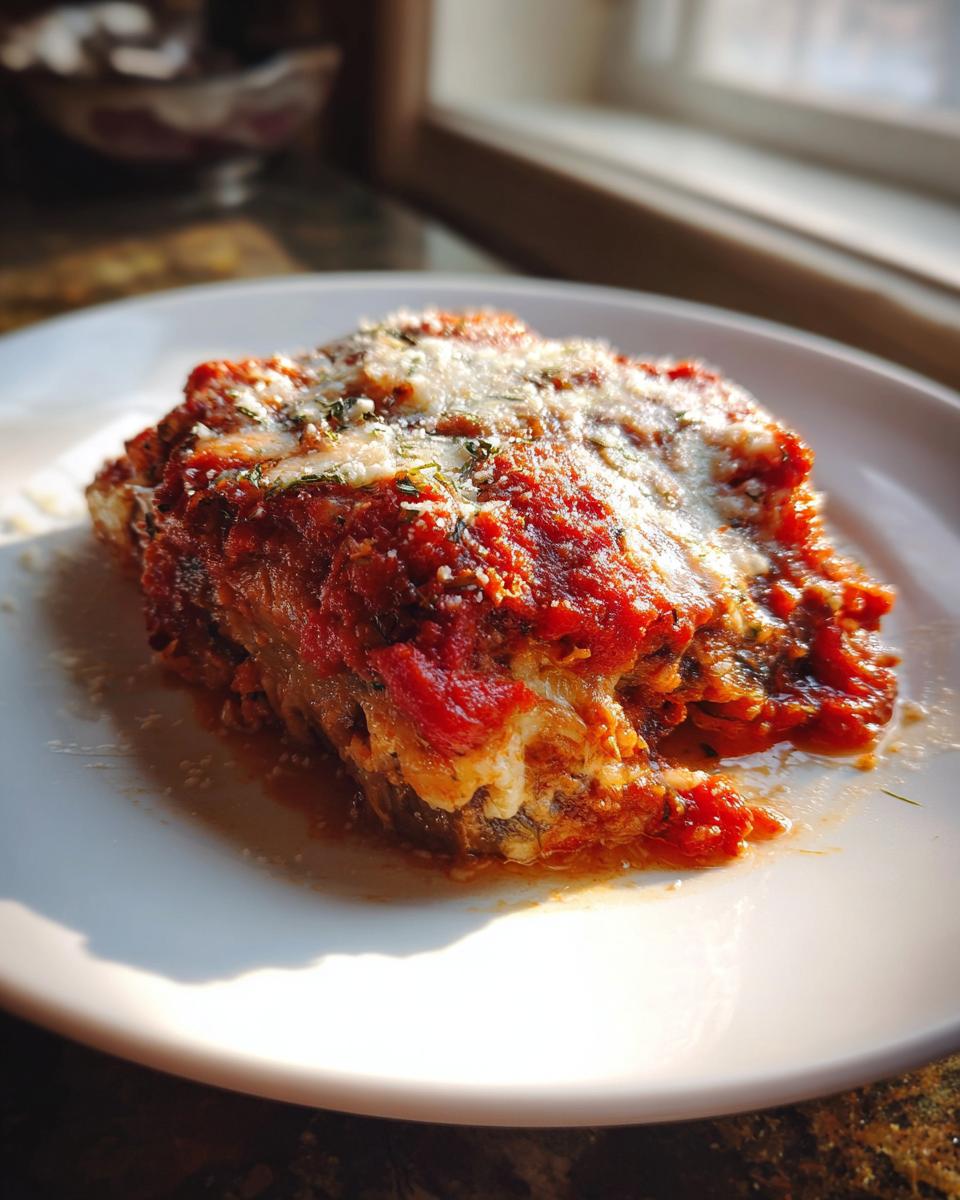
You also absolutely need good crusty bread. Don’t even think about serving this without bread nearby! You need it to scoop up every last drop of that cheesy tomato sauce left at the bottom of the dish. That’s the best part, truly.
Storage: Keeping Grandma’s Recipe Fresh
One of the best things about baked pasta-style dishes like this is that they are always, always better the next day. Seriously! While it’s tempting to eat the whole thing right away, storing it correctly is key to enjoying leftovers.
When it comes to storage, cover your baking dish tightly with aluminum foil or transfer leftovers into an airtight container. You can keep the baked eggplant refrigerated for up to four days. The flavors actually meld together overnight, deepening the tomato and Parmesan notes. It’s almost like a different, even better dinner the second night!
Reheating for the Perfect Bite
I never, ever put an individual serving of this in the microwave if I can help it. Microwaving tends to make the cheese rubbery and the eggplant a little soggy again. We worked too hard frying it golden brown to ruin that texture!
Instead, try reheating individual portions in a small, oven-safe dish. Place a thin layer of extra tomato sauce—maybe a teaspoon or two—right over the portion you want to eat, cover it loosely with foil, and pop it into a 350°F oven for about 15 minutes. This steams it back to life gently, keeping the sauce moist and reheating the cheese evenly so it melts perfectly without hardening. It tastes almost exactly like when it first came out of the oven!
Frequently Asked Questions About My Italian Grandmothers Eggplant Recipe
I get so many wonderful messages about this recipe, and honestly, I love hearing how everyone is adapting it for their families! But I always get a few questions popping up over and over again about technique, especially for those of you making My Italian Grandmothers Eggplant Recipe for the first time. Don’t worry if you have questions; even Nonna used to have to consult the recipe card when the light was funny in the kitchen!
Can I skip the frying step and just bake the breaded eggplant?
Oh, I get why people ask this—we all watch our oil intake! But I have to be honest with you: skipping the fry means you skip the *texture* that makes this recipe so famous. The 30 minutes of salting draws out the water, which helps, but that quick fry in hot oil is what seals the breadcrumbs and gives you that signature crisp exterior that holds up to the sauce in the oven. If you skip it, the coating tends to turn mushy and absorb more sauce than you want. It just won’t be My Italian Grandmothers Eggplant Recipe!
What kind of tomato sauce is best for this dish?
This is a great question because the sauce really impacts the final flavor! Grandma always used a very simple, slow-simmered sauce that was mostly tomatoes, garlic, and basil—nothing too complicated. If you are using jarred sauce, look for something that tastes bright and fresh, not overly sweet or herb-heavy. If your sauce seems a little too thin, you can thicken it slightly by simmering it down for 10 minutes, or you can use a slightly thicker homemade batch, like the one I detailed here.
Can I substitute the Parmesan or mozzarella cheese?
You can definitely change the mozzarella if needed—whole milk, low-moisture mozzarella melts the best, but provolone works in a pinch if you want a sharper bite! The Parmesan, though? That’s where I’d tread carefully. The savory, salty nature of that hard cheese is part of the layering flavor profile. If you absolutely cannot use Parmesan, look for Italian hard cheeses like Pecorino Romano. Just remember that Pecorino is saltier, so maybe dial back the amount of salt you use while salting the eggplant initially!
Can I prepare this dish ahead of time?
Yes, this is a fantastic dish for making ahead, which is why it’s perfect for hosting! You can definitely assemble the entire casserole—layering the sauce, fried eggplant, and cheeses—a day before you plan to serve it. Keep it covered tightly in the refrigerator. When you’re ready to bake, I recommend adding about 5 to 10 minutes to the baking time since it’s going in cold from the fridge. It comes out tasting even more fantastic because all those flavors have married during the chill time!
Nutritional Snapshot of This Classic Dish
Now, I know some of you are tracking macros, and believe me, I appreciate you asking about the nutritional goodness tucked into My Italian Grandmothers Eggplant Recipe! However, you have to remember something important about cooking from scratch, especially recipes passed down through generations.
This isn’t some pre-packaged meal where someone measured everything down to the last milligram. Grandma cooked with love and intuition, not with a nutrition label in mind! Because of that, the final count changes wildly depending on how much olive oil you actually use during that first fry, the brand of tomato sauce you grab, or how much cheese you sneak in when nobody is looking (we all do it!).

So, while I strongly suggest you focus on how incredibly filling and satisfying this dish is, please treat any calorie or sodium counts you see online as a rough *estimate* only. The best way to know exactly what’s in your fabulous, comfort-food-filled portion is to enjoy it mindfully and lovingly, just the way Nonna intended!
Print
Italian Grandmother’s Eggplant Recipe
- Total Time: 70 min
- Yield: 6 servings 1x
- Diet: Vegetarian
Description
A simple, traditional recipe for baked eggplant.
Ingredients
- 2 large eggplants
- 1 tablespoon salt
- 1/2 cup all-purpose flour
- 2 large eggs, beaten
- 1 cup breadcrumbs
- 1/4 cup olive oil
- 2 cups tomato sauce
- 1/2 cup grated Parmesan cheese
- 1/4 cup shredded mozzarella cheese
Instructions
- Slice the eggplants into 1/4-inch rounds.
- Place the slices in a colander, sprinkle with salt, and let them sit for 30 minutes to draw out moisture. Rinse the slices well and pat them completely dry with paper towels.
- Set up a breading station: one shallow dish with flour, one with beaten eggs, and one with breadcrumbs.
- Dredge each eggplant slice first in flour, then dip in egg, and finally coat thoroughly with breadcrumbs.
- Heat the olive oil in a large skillet over medium heat. Fry the eggplant slices in batches until golden brown on both sides, about 2-3 minutes per side. Drain on paper towels.
- Preheat your oven to 375 degrees Fahrenheit (190 degrees Celsius).
- Spread a thin layer of tomato sauce in the bottom of a baking dish.
- Arrange a layer of fried eggplant slices over the sauce. Top with more sauce, then sprinkle with Parmesan cheese.
- Repeat the layers until all eggplant is used, finishing with sauce and mozzarella cheese on top.
- Bake for 20 minutes, or until the cheese is melted and bubbly.
Notes
- Drying the eggplant thoroughly after salting prevents excess oil absorption during frying.
- You can substitute dried breadcrumbs with fresh ones for a slightly different texture.
- Prep Time: 45 min
- Cook Time: 25 min
- Category: Dinner
- Method: Baking and Frying
- Cuisine: Italian
Nutrition
- Serving Size: 1 serving
- Calories: 350
- Sugar: 12
- Sodium: 550
- Fat: 18
- Saturated Fat: 5
- Unsaturated Fat: 13
- Trans Fat: 0
- Carbohydrates: 35
- Fiber: 6
- Protein: 14
- Cholesterol: 60
Keywords: eggplant, Italian, baked, fried, tomato sauce, vegetarian, comfort food