
Oh, macarons! They have this reputation for being fussy, almost impossible little cookies, right? I spent years battling hollow shells and sad, flat tops before I finally got them right. Trust me, mastering that delicate, crisp shell takes practice, but once you nail the technique, it’s pure magic. Forget plain ganache, though! We’re taking these classic French beauties and stuffing them with something unbelievably cloud-like: homemade marshmallow frosting. The combination is honestly spectacular—light, airy, and totally addictive. If you’re ready to conquer the notoriously tricky macaron game, following this guide for French Macarons With Marshmallow Frosting will give you bakery-quality results right at home!
Essential Ingredients for Perfect French Macarons With Marshmallow Frosting
When it comes to macarons, you absolutely cannot guess! This is where precision meets pure alchemy. Unlike cookies where you can throw things in by the cupful, macarons demand accuracy, especially for the shells. That’s why I beg you: please use a kitchen scale for the powders and egg whites. It makes the difference between success and a giant bag of almond dust. If you want those perfect little feet, the scale is your best friend!
We have two main teams here: the delicate shells and the fluffy, sweet filling. Don’t skimp on the ingredients, especially the eggs—we need those whites aged properly! Also, remember that oat milk won’t substitute for the liquid in the frosting, so stick strictly to this list!
For the Macaron Shells
For the shells, the single most important thing is your egg whites. They need to be aged—meaning separated a day before and kept chilling in the fridge. This helps them whip up stronger and more stable!
- 120 g almond flour (make sure it’s fine, not coarse almond meal!)
- 120 g powdered sugar
- 90 g aged egg whites (about 3 large eggs worth)
- 90 g granulated sugar
- 1/4 tsp cream of tartar
- Pinch of salt
For the Marshmallow Frosting
This frosting is basically stabilized, fluffy marshmallow fluff, and it needs high heat to set up correctly. The light corn syrup is necessary for that wonderfully stretchy texture!
- 1 cup granulated sugar
- 1/2 cup light corn syrup
- 1/4 cup water
- 2 egg whites
- 1 tsp vanilla extract
Tips for Achieving Flawless French Macarons With Marshmallow Frosting Shells
Getting those perfect shell ‘feet’—you know, those ruffly little bottoms—isn’t just luck; it’s all about meticulous steps leading up to the oven. We are making a French meringue here, which is a little more forgiving than the Italian method, but still requires respect. Remember those aged egg whites we talked about? They’re ready to shine now!
Also, no matter how eager you are, don’t skip the resting period. This is what allows the skin to form, which traps the steam and forces those glorious feet upwards when baking. For a fun pairing later, check out this recipe for a Classic Margarita!
Sifting and Meringue Development
First command: sift your almond flour and powdered sugar together—not once, but twice! We want zero clumps; we are aiming for fine, velvety dust. Now for the egg whites: whip them up with the cream of tartar and salt until they start looking softly peaked. Then, rain in that granulated sugar slowly, beating until you get stiff, glossy peaks. If you stick your whisk straight up, the peak should stand firm, almost like it’s saluting you.

The Macaronage Technique
This is the make-or-break moment for texture, called macaronage. You need to take that light, airy meringue and gently fold in the dry ingredients. The goal here isn’t blending everything into oblivion! Stop mixing when the batter flows off your spatula like thick lava or molten ribbon—it should hold its shape briefly before sinking back in. If you mix beyond this point, you’ve over-mixed, and your shells will spread too thin and become hollow.
Once piped, I always give the baking sheet a good, firm WHACK on the counter three or four times. Seriously, don’t be shy! This forces those big, pesky air bubbles that cause cracking right to the surface. Pop them with a toothpick if you see any survivors, and then let them rest until they form that non-sticky skin. Patience pays off!
Step-by-Step Instructions for French Macarons With Marshmallow Frosting
Okay, so you’ve sifted, you’ve managed the macaronage, and you’ve tapped those trays like you mean it—now it’s time for the heat! Baking is where the real magic happens, transforming that sweet batter into something beautifully structured. Once the shells are baked, we switch gears entirely to the marshmallow frosting, which feels more like making candy than baking!
We’ll walk through baking those temperamental shells first, followed by making that gooey, gorgeous frosting. Pay close attention to the sugar syrup temperature; that’s key for stable marshmallow!
Baking and Cooling the Shells
Get your oven preheated to 300°F (or 150°C). You need a steady, slightly lower heat for these delicate things. Pop those piped, rested shells in the oven for about 12 to 15 minutes. How do you know they’re done? The ‘feet’ should form nicely, and when you gently nudge the top of a shell, it shouldn’t wiggle around on its base. If it moves, give it another minute or two!
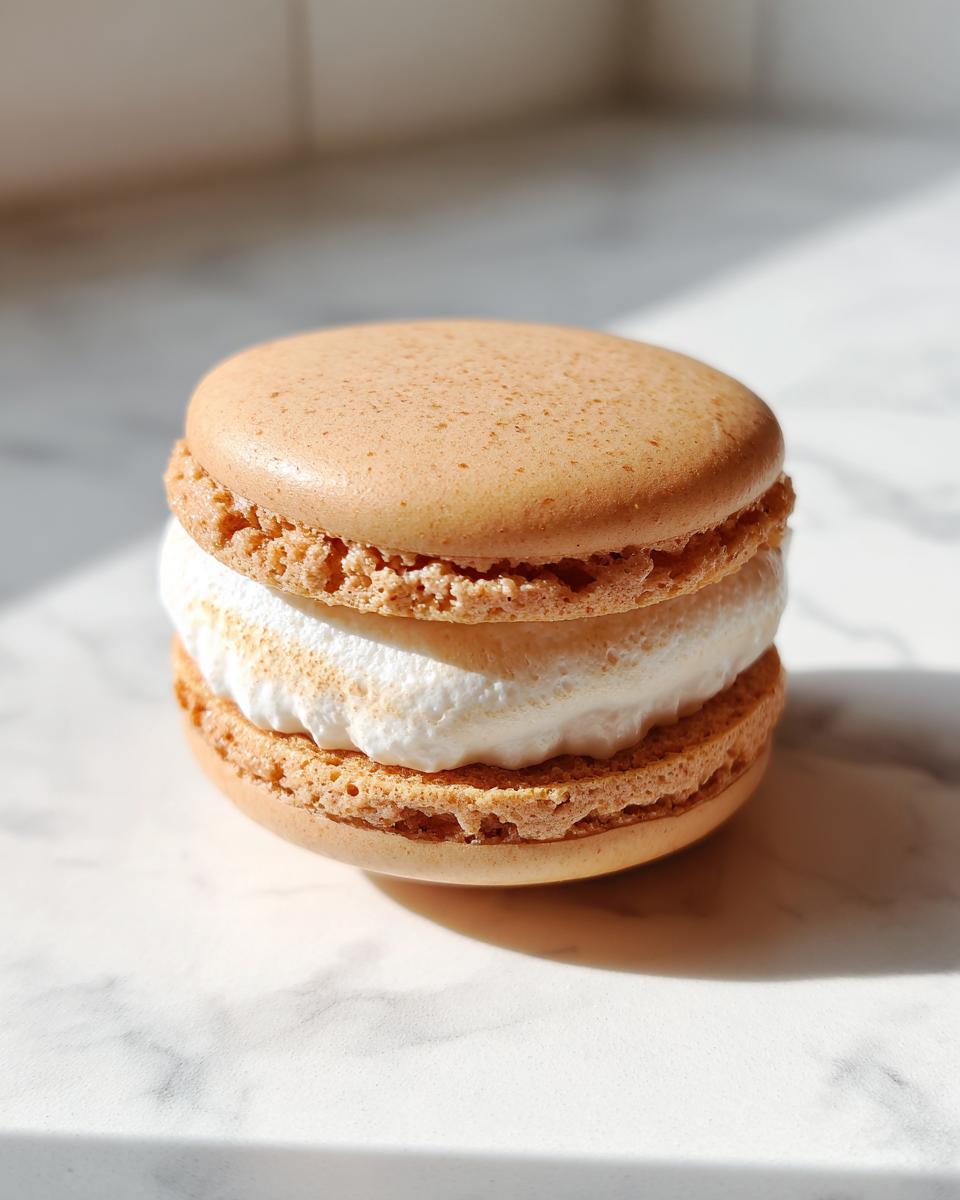
Crucially, once they come out, leave them alone! Let them cool completely on the baking sheet before you even attempt to peel them off the parchment paper. If they stick or tear, it means they needed a few more minutes of rest time. I usually let them cool entirely while I prepare the filling.
Creating the Marshmallow Frosting
Time for the filling! First, get serious about that sugar syrup. Combine the granulated sugar, corn syrup, and water in a saucepan. Heat this mixture until it hits exactly 240°F (115°C) on your candy thermometer. This temperature guarantees the marshmallow sets up perfectly stiff and glossy, not runny!
While that syrup climbs the thermometer, start whipping your two egg whites until they form soft peaks. Once the syrup hits temperature, you have to work fast but carefully. Slow the mixer down and drizzle that hot syrup down the side of the bowl—never directly onto the whisk! Keep beating until the outside of the bowl feels cool to the touch. That’s the signal! Add your vanilla, and you’ll have the fluffiest, most stable marshmallow frosting you’ve ever seen.
Assembling Your French Macarons With Marshmallow Frosting
The moment of truth! All that effort, the sifting, the careful macaronage, the anxiety over baking feet—it all comes down to this final assembly. Make sure both your macaron shells and that beautiful marshmallow frosting are completely cooled down. Warm frosting on a room-temp shell is a recipe for a messy disaster, trust me!
Once everything is balanced, take your cooled shells and start pairing them up—find two shells that are nearly identical in size so they hug each other perfectly when done. If you want a really neat, professional look, load that marshmallow meringue into a piping bag fitted with a round tip. Piping gives you that classic swirl, and it’s easier to control the exact amount you need.
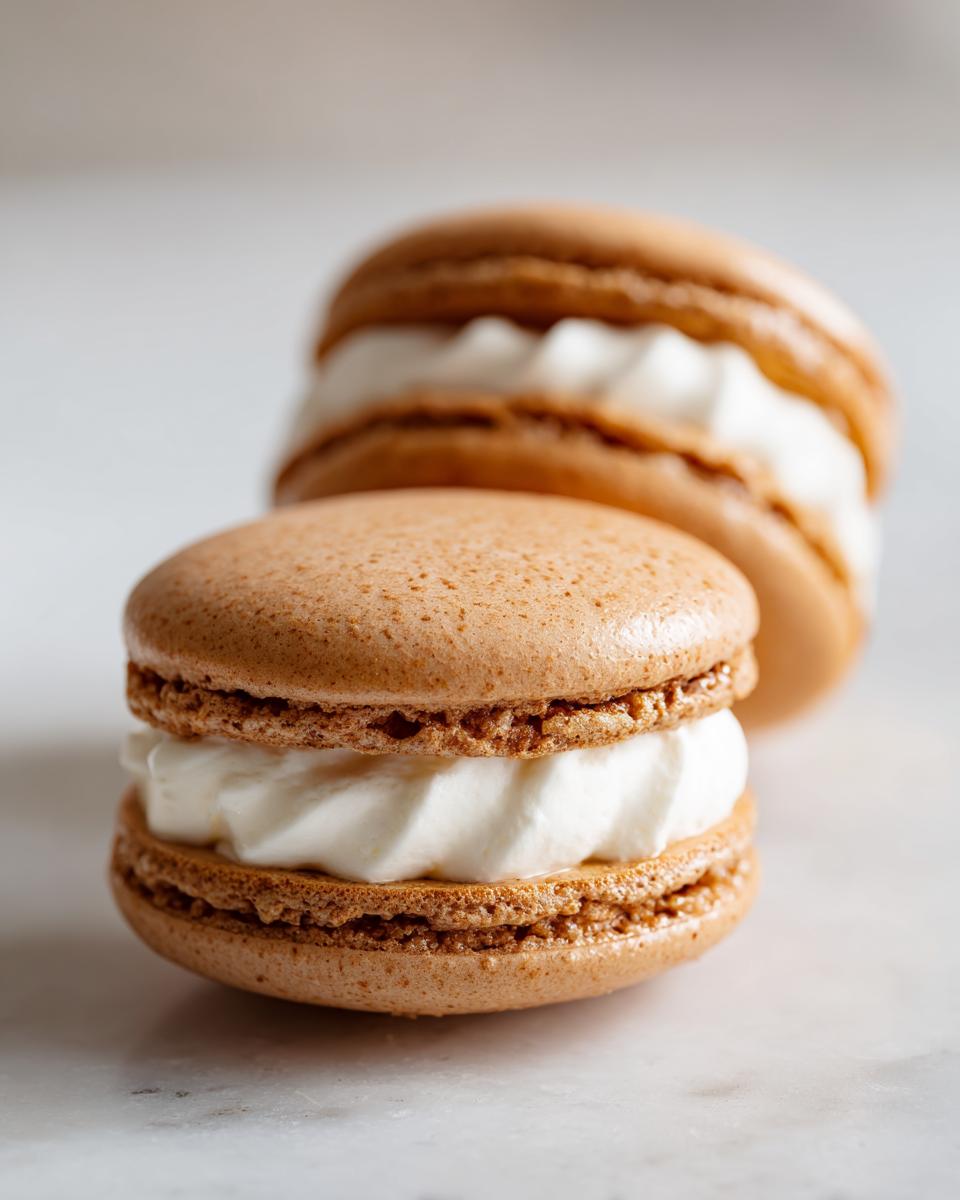
However, if you’re feeling lazy or just want a quicker finish, spreading works great too! Just use a small offset spatula and place a dollop of frosting in the center of one shell, then gently press the second shell on top. If you spread it, just be careful not to push too hard, or the frosting will ooze out the sides too much. A little overhang is charming, but we aren’t trying to make a massive marshmallow sandwich here!
If you made extra shells, great! You can store the naked shells later, or you can even try making some chocolate chip sandwich cookies next time, just for contrast! For these French Macarons With Marshmallow Frosting, once they are filled, they are ready to serve, but they get even better after chilling for a few hours.
Troubleshooting Common French Macarons With Marshmallow Frosting Issues
Don’t you hate it when you follow every step perfectly and still get a wonky macaron? I’ve been there, staring sadly at a tray of cracked, humpy little cookies. The good news is that 99% of macaron problems are solvable once you know what went wrong in the process! We need to be detectives here.
If your shells are cracking on top, nine times out of ten that means you rushed the resting period. They didn’t form a proper skin to trap the steam, so the batter exploded upwards instead of forming those nice feet. Let them rest longer!
Hollow shells—the absolute worst! That usually points back to under-mixed batter (not enough smoothing during macaronage) or baking them too low and slow. If they look good but deflate after cooling, it’s likely a slight overmix. Keep practicing that ribbon consistency, and you’ll get it. If you want a different, simpler cookie challenge next, I highly recommend trying out these chocolate chip sandwich cookies. They are much more forgiving!
Ingredient Notes and Substitutions for Macarons
I can’t stress this enough: macarons truly are sensitive little divas when it comes to ingredients. We aren’t making simple drop cookies here; every single gram counts, which is why that kitchen scale I mentioned earlier is practically mandatory for these simple syrup based recipes. When you substitute things in baking, you often get a different outcome, but with macarons, substitutions can lead to complete disaster.
The Crucial Difference Between Almond Flour and Almond Meal
This is probably the number one mistake I see people make when trying to bake macarons! You absolutely must use almond *flour*, not almond *meal*. Almond meal is coarser—it still has the skins mixed in, giving it a rougher texture. If you use meal, your shells will be grainy, they won’t smooth out properly when you tap them, and they certainly won’t get those lovely smooth tops.
Almond flour is ground much, much finer—it’s almost as powdery as the powdered sugar we use. If you can only find almond meal at your store, try sifting it four or five times, or even pulsing it in a food processor for just a few quick bursts, making sure it doesn’t turn into paste before you sift it again. But honestly, if you can buy true almond flour, do that for your French Macarons With Marshmallow Frosting shells.
Why Aging Egg Whites Must Not Be Skipped
I know it feels weird to separate eggs a day ahead of time and leave them uncovered in the fridge, but it’s a necessary evil for truly great macaron feet! Aging the whites allows some of the moisture to evaporate. Less water means your meringue can whip up much stiffer and hold its structure better during the macaronage process, resulting in a stronger shell.
If you are in a huge rush and can’t wait 24 hours, you can try spreading the whites thinly on a baking sheet for about an hour to speed up evaporation, but be careful not to let them dry out completely! The cream of tartar helps stabilize them, but the aging is where the real difference is made for a sturdy French meringue base.
Substitutions for the Frosting Components
Honestly, don’t try to swap anything in the marshmallow frosting unless you want a different kind of frosting altogether! The corn syrup is non-negotiable because it prevents the sugar from crystallizing and gives that signature pull and chewiness we expect from marshmallow fluff. If you tried using honey or maple syrup, you’d end up with a runny mess because those syrups don’t behave the same way under heat as light corn syrup does.
Also, remember that the frosting relies on those two egg whites being whipped to stiff peaks to trap the hot syrup correctly. You need that protein structure! Stick to the plan here, and your frosting will be perfect every single time.
Serving Suggestions and Storage for Your French Macarons
These French Macarons With Marshmallow Frosting are just too beautiful to rush through! While they are ready to eat right after assembly, they honestly get way better after they’ve had time to set up. The moisture from the marshmallow frosting slightly softens the crisp shell, making that perfect textural contrast—it’s divine!
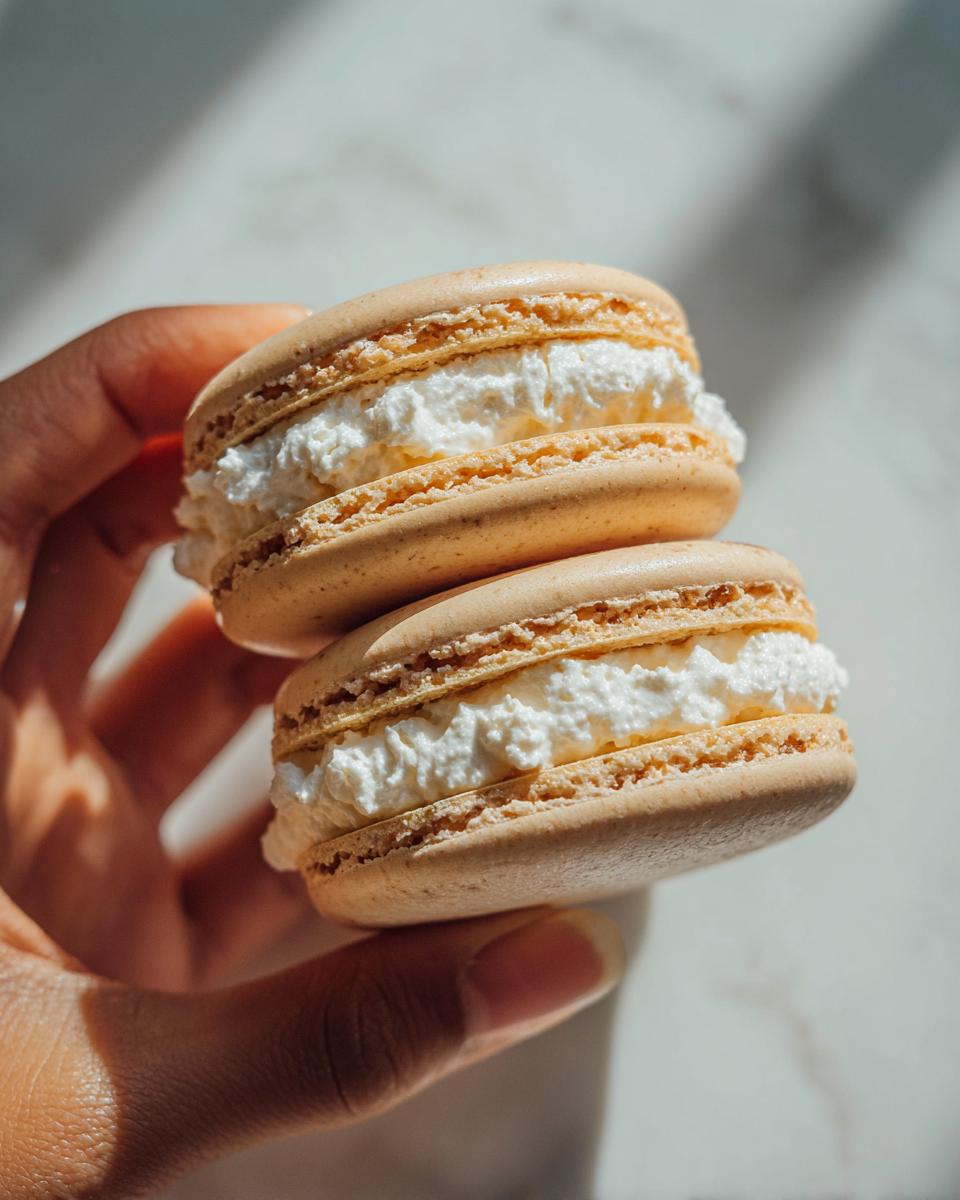
I always recommend chilling them for at least a few hours, but for the absolute best flavor marriage, let them nap in the fridge overnight. Store them in an airtight container. They usually stay fantastic for about three to four days, maybe five if your kitchen isn’t too humid. Keep an eye on the frosting, though; it’s delicate!
When it comes to serving, these delicate sweets pair perfectly with something light and bubbly, since the frosting is already quite rich. Skip the heavy coffee and try a sparkling tea or a light, fruity mocktail. We have some fantastic recipes over in the mocktails category that would be just the ticket to balance out the sweetness of the marshmallow filling!
Frequently Asked Questions About French Macarons With Marshmallow Frosting
I know you’ve got questions! Macarons always seem to have one little quirk that trips people up. Don’t worry, we’ve all been there, searching online for why our beautiful French meringue collapsed into a puddle. That’s why I wanted to gather the most common panics right here before you even start!
Whether you’re wrestling with getting the right ‘feet’ or wondering about storage, these answers should get you back on track. If you need cool, refreshing pairing ideas for these sweet treats, try checking out the recipe for the Cucumber Mint Cooler Mocktail!
Why are my macaron shells cracking during baking?
Cracking is almost always humidity or rushing the rest time. If the surface of the batter is still sticky—meaning you haven’t developed that dry skin—the trapped air has nowhere to go but up through the top when it hits the heat. It’s like a tiny oven explosion! Make sure your kitchen isn’t too damp, and let them rest until you can gently touch the top without any batter sticking to your finger, even if it takes an hour or more!
Can I use regular sugar instead of granulated sugar in the meringue?
Yes, but you must be specific! For the French meringue in the macaron shells, we use granulated sugar because we need those crystals to dissolve slowly while whipping the egg whites into that glossy, stiff peak. The powdered sugar is only used in the dry mix with the almond flour. If you tried using powdered sugar for the meringue instead of granulated, your meringue wouldn’t get stiff nearly as fast, and the final texture would be off because powdered sugar has cornstarch in it!
How long do the marshmallow-filled French Macarons last?
Because we’re using that homemade marshmallow frosting, which is quite stable, these last longer than some other macaron fillings! If you store them correctly in an airtight container in the fridge, they’re great for about four days. They taste best after they’ve been in there for about 12 hours, letting that frosting really infuse the shell just a tiny bit. Don’t freeze them once they’re assembled, though—the humidity change when defrosting is rough on the shells!
Rate This French Macarons With Marshmallow Frosting Recipe
Whew! We did it! You’ve successfully navigated the delicate world of French meringue and mastered that sticky marshmallow frosting. Now that you’ve baked a batch of these beautiful strawberry lemonade-inspired pastries, I really want to know how they turned out for you!
Don’t be shy—let me know in the comments below! Did you get those perfect little feet? How did your family react to the marshmallow filling? Every batch is a learning experience, and your feedback helps other bakers conquer this recipe next. If you loved how these turned out, please consider giving the recipe a five-star rating. Happy baking!
Print
French Macarons with Marshmallow Frosting
- Total Time: 75 min
- Yield: About 20 assembled macarons 1x
- Diet: Vegetarian
Description
A recipe for classic French macarons filled with a sweet marshmallow frosting.
Ingredients
- 120 g almond flour
- 120 g powdered sugar
- 90 g aged egg whites (about 3 large eggs)
- 90 g granulated sugar
- 1/4 tsp cream of tartar
- Pinch of salt
- For the Frosting:
- 1 cup granulated sugar
- 1/2 cup light corn syrup
- 1/4 cup water
- 2 egg whites
- 1 tsp vanilla extract
Instructions
- Prepare the Macaron Shells: Sift almond flour and powdered sugar together twice.
- In a clean bowl, beat egg whites with cream of tartar and salt until soft peaks form.
- Gradually add granulated sugar, beating until stiff, glossy peaks form (French meringue).
- Gently fold the dry ingredients into the meringue in three additions until just combined (macaronage).
- Pipe 1.5-inch circles onto parchment-lined baking sheets.
- Tap the sheets firmly to release air bubbles. Let the shells rest until a skin forms (about 30-60 minutes).
- Bake at 300°F (150°C) for 12-15 minutes, until feet form and shells are set. Cool completely.
- Prepare the Frosting: Combine sugar, corn syrup, and water in a saucepan. Heat to 240°F (115°C).
- While the syrup heats, beat egg whites until soft peaks form.
- Slowly pour the hot syrup down the side of the bowl into the egg whites while beating on medium speed.
- Continue beating until the mixture is thick, glossy, and the outside of the bowl is cool to the touch. Beat in vanilla extract.
- Assemble: Pair cooled shells and pipe or spread marshmallow frosting between two shells.
Notes
- Aged egg whites yield better macaron shells; separate them a day ahead and refrigerate.
- Use a kitchen scale for accurate ingredient measurements.
- The resting time for the shells is crucial for developing the ‘feet’.
- Prep Time: 60 min
- Cook Time: 15 min
- Category: Dessert
- Method: Baking
- Cuisine: French
Nutrition
- Serving Size: 1 macaron
- Calories: 150
- Sugar: 25
- Sodium: 20
- Fat: 4
- Saturated Fat: 1
- Unsaturated Fat: 3
- Trans Fat: 0
- Carbohydrates: 28
- Fiber: 1
- Protein: 3
- Cholesterol: 15
Keywords: macarons, french pastry, meringue, marshmallow frosting, almond flour cookies, meringue cookies