
Okay, raise your hand if you’ve ever tried to make rice and ended up with a sad, sticky, gluey mess? Me too! Way too many times when I was starting out. I swear I nearly gave up on making anything besides pasta. But trust me, getting that pillowy, separate-grain perfection isn’t magic; it’s just about knowing a few non-negotiable steps. That’s why I’m so excited to share my foolproof stovetop method for the true **How To Cook Basmati Rice Recipe**. This isn’t some complicated pressure cooker situation; we’re talking simple ingredients, the right timing, and rice that comes out beautifully every single time. You’re going to wonder why you ever wasted money on instant stuff!
Why This How To Cook Basmati Rice Recipe Works (Expert Tips)
When you nail this simple stovetop method, you realize perfect rice isn’t luck—it’s chemistry! We are aiming for fluffy, separate grains, and that starts before the heat even comes on. The single biggest reason people get gummy rice is skipping the washing step. We need that surface starch completely gone so the grains don’t stick together like glue. Also, pay attention to your pot! I use a heavy-bottomed saucepan because it distributes the heat evenly, making sure the bottom doesn’t scorch while the top is still cooking.
The ratio we use—one part rice to one and a half parts water—is calibrated perfectly for this specific cooking time. Too much water, and you boil it down; too little, and you’re left with hard little kernels. That final resting period, which feels like forever but isn’t, is when all the moisture settles in evenly. Trust me, once you understand these pieces, your **How To Cook Basmati Rice Recipe** success rate goes to 100%.
The Critical Role of Rinsing in How To Cook Basmati Rice Recipe
Seriously, don’t skip this part, or you’ll have risotto instead of basmati! You need to run cold water over the rice in a fine-mesh sieve. You’ll see the water come out cloudy and white at first. Keep rinsing and gently swirling the grains until that water runs totally transparent. That cloudy liquid? That’s the loose starch coating the rice kernels. Washing it off is the magic trick that guarantees your rice won’t turn into a sticky, unappetizing block right out of the pot.

Why You Need Low Heat After Boiling for How To Cook Basmati Rice Recipe
We give the rice a good, rolling boil to get things moving along. But the moment that lid goes on, the heat needs to drop immediately down to the absolute lowest setting your burner allows. High heat after boiling just drives off all your precious water too fast, leaving you with scorched rice on the bottom and grains that are still hard in the middle. We want a gentle, steamy environment for the last 15 minutes. That low simmer traps pure steam inside that pot, which is what cooks the inside of every grain perfectly without drying out the outside.
Essential Ingredients for How To Cook Basmati Rice Recipe
When you’re making this **How To Cook Basmati Rice Recipe**, the ingredient list is blessedly short, which means quality really matters! You only need four things, but make sure you’re grabbing true basmati rice. That long grain is what gives you the amazing, separate texture we’re aiming for. Don’t try to substitute minute rice or anything else here; stick to basmati for this specific method to work its magic.
Here’s what you’ll need for about two servings:
- 1 cup basmati rice (make sure you rinse this really well, like we talked about!)
- 1.5 cups water (room temperature is fine)
- 0.5 teaspoon salt (don’t skimp, it brings out the flavor!)
- 1 teaspoon oil OR butter (butter gives it a richer taste, but oil works if you prefer)
That’s it! Because we only use four components, every single one of them needs to be good quality. If your rice is fresh, you are 90% of the way there. See? Super easy.
Step-by-Step Instructions: How To Cook Basmati Rice Recipe Perfectly
Now for the main event—the actual making of the rice! Don’t panic; this is where all those explanations about rinsing pay off. We are going to move quickly at the start, but then we lean back and let the steam do all the hard work. Remember, timing is everything in this **How To Cook Basmati Rice Recipe**. We need precision, but like any good home cook, we do it with confidence!
Preparation: Rinsing and Combining for How To Cook Basmati Rice Recipe
First things first, if you haven’t rinsed your rice yet, pause and do it now until that water is crystal clear. Once it’s clean, toss the cup of rice right into a medium saucepan. I always use a saucepan with a decent weight to the bottom; it helps stop scorching later on. After the rice, add your 1.5 cups of water, the half teaspoon of salt, and that teaspoon of oil or butter. Give it a gentle stir just once to mix everything nicely—don’t mash the grains! If you ever need to make other things like simple syrup, you can look up recipes, but for rice, stick to this method.
The Cooking Phase: Boil, Simmer, and The No-Peek Rule
Place the pan over medium-high heat and bring that mixture to a rapid, full boil. You want to see big, rolling bubbles across the surface. This is the exciting part! The absolute second it hits that boil, you must immediately reduce the heat to the absolute lowest setting your stove has—basically just enough to maintain a whisper of steam. Cover it with a tight-fitting lid. I cannot stress this enough: DO NOT lift that lid for 15 full minutes. If you peek, you let the steam out, and your rice will be hard in the middle. Just trust the process and maybe go prep your side dishes!
Resting and Fluffing: Finishing Your How To Cook Basmati Rice Recipe
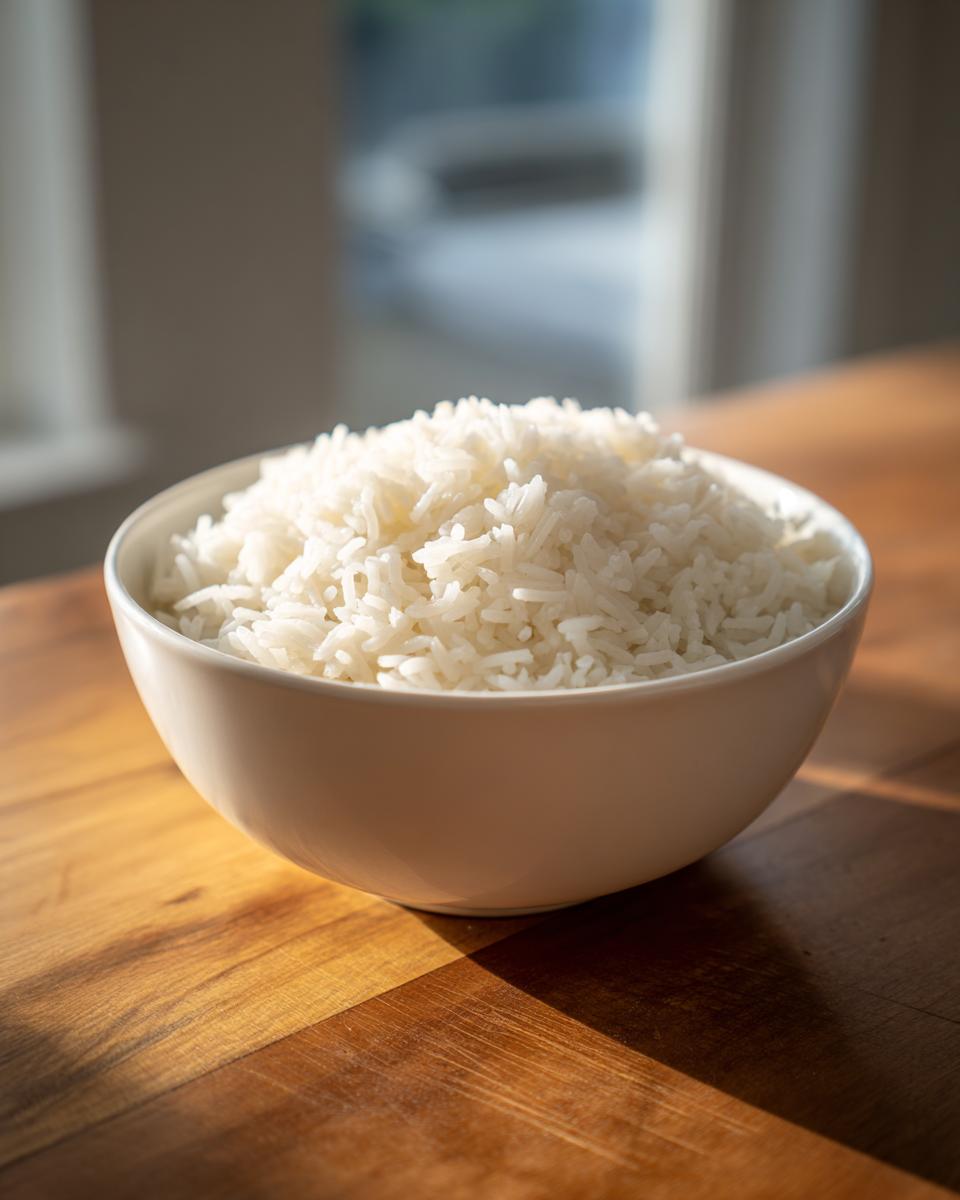
When those 15 minutes are up, turn the heat OFF completely. Do not uncover it! Let the pot sit, covered but off the heat, for another full 10 minutes. This resting period is crucial; it finishes steaming the rice using retained heat and helps those grains firm up perfectly. After the rest, take that lid off—wow, smell that? Now, take a fork, not a spoon, and gently fluff the rice from the bottom upward. You want to separate those grains easily; a fork does this better than anything else. Serve it up right away!
Ingredient Notes and Substitutions for How To Cook Basmati Rice Recipe
Even though this **How To Cook Basmati Rice Recipe** is super simple, people always ask me about swaps, and that’s great! Knowledge is power in the kitchen. The rice itself is the star here, obviously. If you try using regular long-grain white rice instead of basmati, you’ll definitely need more water—probably closer to 1.75 or even 2 cups per cup of rice, and the texture just won’t be as light. Basmati is special, so if you can, stick with it!
What about the fat? Butter is my personal favorite. It gives the rice such a lovely, subtle richness that oil just can’t replicate. But look, if you’re out of butter or keeping it strictly dairy-free, feel free to use coconut oil or a neutral vegetable oil. Just make sure you use that full teaspoon. That little bit of fat helps coat the grains, helping keep them separate during the steaming process.
Salt levels are negotiable, too. I like 1/2 teaspoon for one cup of rice because I serve it plain, but if you are serving it with a heavily salted curry, you might want to cut that down to just a pinch. If you ever get into making great homemade ginger beverages, like comparing ginger ale versus ginger beer, it teaches you how salt and flavor balances work!
Don’t even think about swapping the water measurement, though. Seriously. That 1 part rice to 1.5 parts water ratio is locked in for that 15-minute simmer, 10-minute rest timing. Messing with that high chance of ending up with dry, crunchy rice or watery sludge.
Serving Suggestions for Perfect How To Cook Basmati Rice Recipe
Wow, so you’ve mastered the **How To Cook Basmati Rice Recipe** and you have this gorgeous, fluffy island of perfection sitting in your pot! What do you serve it with? Because basmati is so wonderfully fragrant and light, it shines next to richly flavored dishes. It’s the perfect canvas, really!
My absolute favorite way to eat this rice is alongside a classic Indian lentil daal. The slight earthiness of the daal just marries beautifully with the subtle nuttiness of the basmati. Scoop that creamy lentil goodness right over the top—it soaks in just perfectly without turning everything soggy.
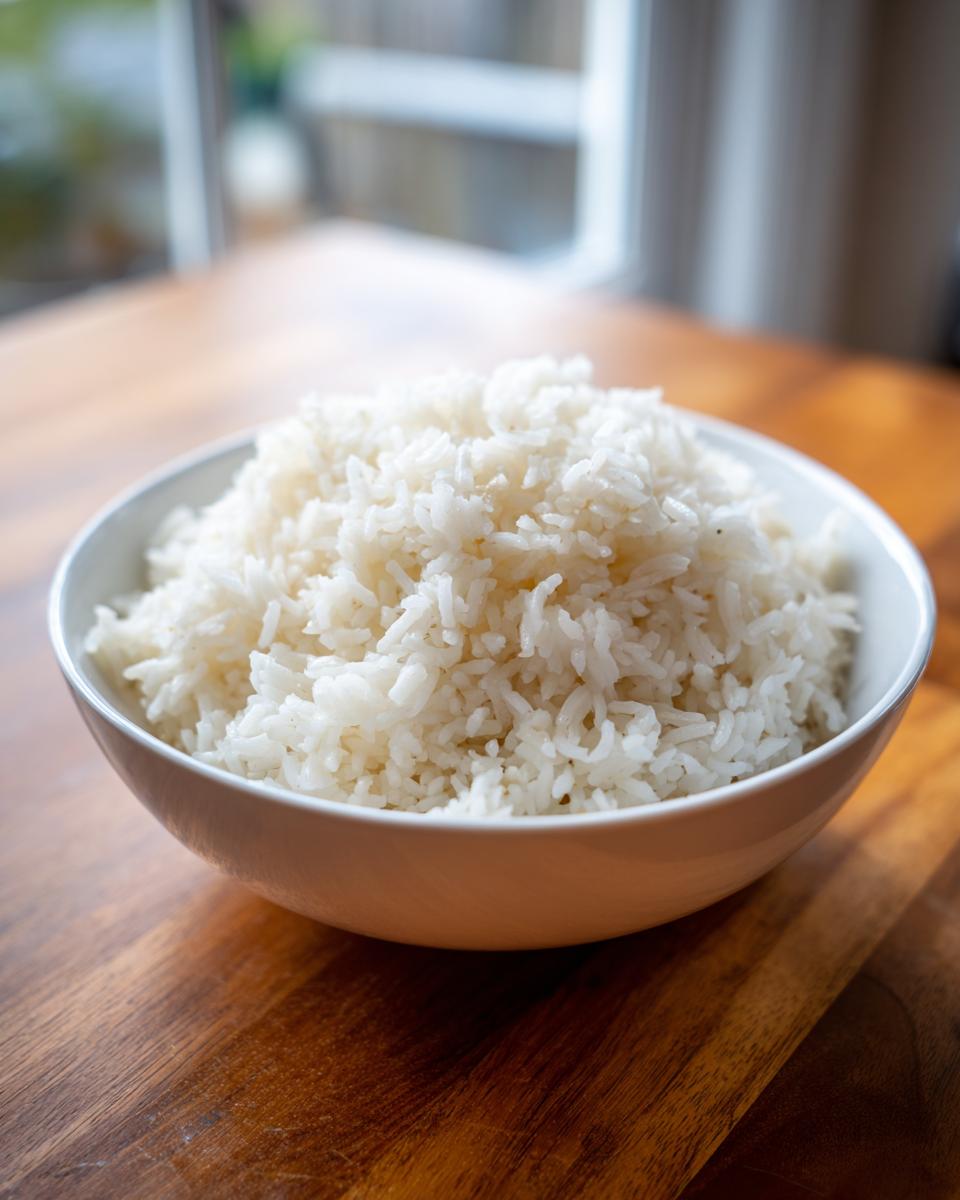
If you aren’t feeling Indian food tonight, try coating some roasted vegetables liberally in rosemary and garlic, then serve the rice on the side. The fluffy texture manages to soak up any leftover olive oil and vegetable juices, making every bite interesting. It’s a great side dish, even for something totally different, like a savory stew or maybe even those amazing jerk chicken dumplings recipe if you’re feeling fusion!
The key is to pair it with something saucy or flavorful. Since our **How To Cook Basmati Rice Recipe** delivers such clean, clear grains, you really want to dress it up with something bold on top!
Storage and Reheating Instructions for Leftover How To Cook Basmati Rice Recipe
Don’t you hate throwing away perfectly good rice? Thankfully, leftovers from my **How To Cook Basmati Rice Recipe** last for days! The trick to storing it safely is simple: get it cool fast. Once the rice is ready, spread it out onto a clean plate or baking sheet and let it cool down to room temperature quickly—don’t leave it sitting on the counter for hours.
Once cool, transfer it into an airtight container. It holds up beautifully in the fridge for about three to four days. When you’re ready to eat it later, the key is reintroducing moisture. You can microwave a portion in a bowl with just a tablespoon or two of water over the top, covered, until it’s steamy again. Or, my favorite method is to steam it gently in a colander over simmering water until it’s soft. It puffs right back up like it was just cooked!
Troubleshooting Common How To Cook Basmati Rice Recipe Issues
Even using my foolproof **How To Cook Basmati Rice Recipe**, sometimes kitchen gremlins show up, right? Don’t worry! I’ve totally been there, and having had that gluey mess or rock-hard grains happen to me means I know exactly what the fix is. Most issues come down to one of two problems: the rice is either too hard, or it’s too soft and sticky. Luckily, both of these are usually super easy to correct based on the steps we already took.
If your rice comes out hard or crunchy when you test it after the final rest—meaning you can bite it and it’s still tough in the middle—it needs more steam time. This happens if you accidentally lifted the lid too soon, or maybe your burner runs a little hotter than mine. Don’t panic! Add just two tablespoons of water back into the pot, put the lid on tight, slide it back onto the absolute lowest heat setting for five minutes. Then, let it rest off the heat for another five minutes. That little extra push of steam usually finishes the cooking process perfectly.
Now, the opposite problem: the rice feels mushy, heavy, or incredibly sticky, even after you fluff it. This almost always means one of two things happened: either you didn’t rinse the starch off well enough, or maybe your heat didn’t drop fast enough after the initial boil. If it’s sticky, the best I can recommend is trying to dry it out a bit. Spread the rice thinly on a large baking sheet and let it sit uncovered in a warm spot (not hot!) for about 15 minutes to let some surface moisture evaporate. Alternatively, you can quickly reheat it in a dry, non-stick pan over medium heat for a minute or two, stirring constantly until it feels drier. It won’t be perfectly fluffy like the first time, but it saves it from being a total loss!
The key to avoiding these headaches for your next **How To Cook Basmati Rice Recipe** attempt is really focusing on that rinse and that immediate heat drop. Those two steps are where the magic is hidden, I promise you!
Frequently Asked Questions About How To Cook Basmati Rice Recipe
I know you have questions! When you nail the **How To Cook Basmati Rice Recipe**, the process seems so simple it makes you think you must be missing something. But nope, usually, you’re just being a careful cook! Here are a few extra thoughts I get asked about all the time when people try this stovetop method for the first time.
What is the best rice to water ratio for How To Cook Basmati Rice Recipe?
For this specific method—rinse well, bring to a boil, then simmer covered—the golden ratio is exactly 1 cup of basmati rice to 1.5 cups of water. If you were to try cooking brown rice or even short-grain white rice, that ratio changes completely, but for fluffy basmati, 1:1.5 is what keeps the grains perfectly cooked without being swimming in water. Stick to it!
Can I cook this How To Cook Basmati Rice Recipe in a rice cooker?
You absolutely can, but you’ll need to adjust things a bit, which is why I prefer the saucepan! If you use a standard electric rice cooker, you can skip the boil/simmer steps and usually use the exact same 1 cup rice to 1.5 cup water ratio. However, you *must* still rinse the rice thoroughly or it will get sticky in the machine. The main benefit of the stovetop method is your ability to control the heat transition, which is why I think it yields fluffier results. If you’re looking for tips on other techniques, even things like avoiding the fatal mistake in ice tea preparation, it all comes down to controlling core variables!
Does soaking the rice help with How To Cook Basmati Rice Recipe?
This is a fun one! A lot of traditional methods call for soaking basmati for 20 or 30 minutes. Soaking does help the grain absorb water so it cooks faster and can actually lead to slightly longer grains! If you choose to soak, you *must* reduce your cooking water, sometimes down to just 1.25 cups per cup of rice, or it will get too mushy. For speed and simplicity, my 25-minute **How To Cook Basmati Rice Recipe** skips the soak altogether, relying on the thorough rinse and the steam phase to do the hydration work.
Why do I have to rest the rice off the heat?
That 10-minute rest period off the heat is called ‘carry-over cooking,’ and it’s essential for true fluffiness. When you lift the lid after simmering, there’s still a ton of heat trapped in the grains and the pot. If you fluff right away, you break those delicate steamed starches, and they turn gummy. Resting lets the internal steam equalize across all the grains, so when you fluff, they separate beautifully instead of clumping.
Estimated Nutritional Data for How To Cook Basmati Rice Recipe
Now, I am absolutely *not* a nutritionist, so please take these numbers with a grain of salt—literally! This is just an estimate based on the core ingredients you see in the recipe details, calculated for the standard serving size of half a cup of cooked rice. I like sharing this because when I cook something this simple, it’s nice to know I’m not loading up on heavy fats or sugar!
Keep in mind that if you add butter, oil, or serve it up with, say, a heavy coconut-milk curry, those numbers are going to change fast! But for the plain rice cooked using this **How To Cook Basmati Rice Recipe**, here’s the breakdown per serving:
- Calories: About 200 calories
- Fat: Just 1 gram of fat. Isn’t that amazing for something that tastes so satisfying?
- Carbohydrates: 42 grams, which is exactly what you expect from a nice, whole grain side dish.
- Protein: Around 4 grams per serving.
See? It’s clean, it’s simple, and it fits right into almost any diet! This is why I love the **How To Cook Basmati Rice Recipe** when I’m trying to eat lighter but still want that satisfying, filling foundation for my dinner. It proves that simple cooking doesn’t mean skimping on quality!
Share Your Fluffy Rice Success
Okay, now you’ve got the secrets! You know about the rinsing, you respect the simmer time, and you never, ever peek during the magic 15 minutes. I really hope you go and try this **How To Cook Basmati Rice Recipe** tonight, because I want to hear all about it!
When you serve this fluffy goodness up with your favorite curry or roasted veggies, please come back and let me know how it turned out. Did you manage to keep your hands away from the lid? Did your grains separate perfectly when you fluffed them with that fork? Drop a comment down below—I absolutely love reading your kitchen victories!
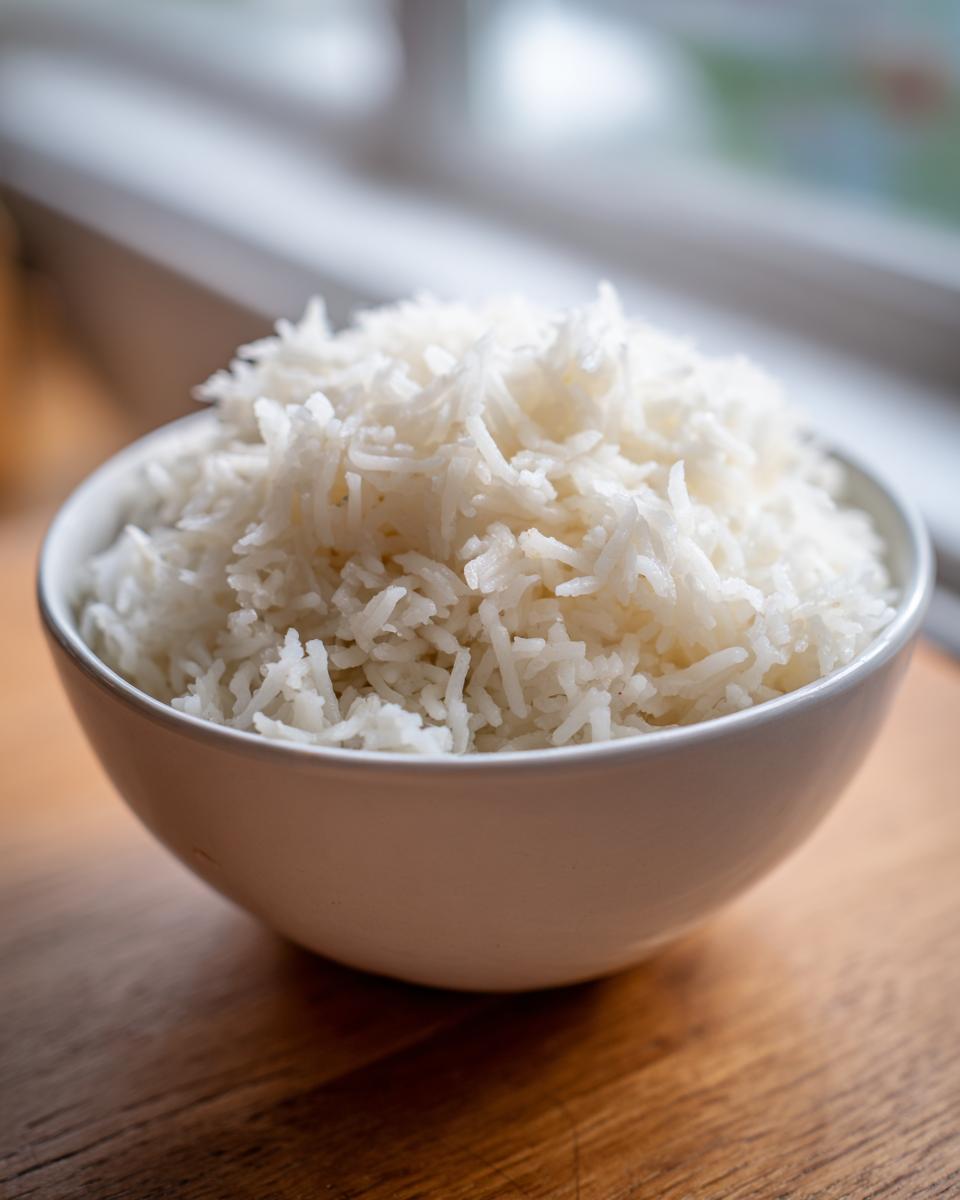
If you can, take a quick snap of your finished pot of rice! Seeing that plume of fragrant, separate grains is the best reward for following these instructions. This simple **How To Cook Basmati Rice Recipe** really is a game-changer, and sharing your results helps other cooks build confidence in the kitchen too. Happy cooking, everyone!
How To Cook Basmati Rice Recipe
- Total Time: 25 min
- Yield: 2 servings 1x
- Diet: Vegetarian
Description
A simple method for cooking fluffy basmati rice on the stovetop.
Ingredients
- 1 cup basmati rice
- 1.5 cups water
- 0.5 teaspoon salt
- 1 teaspoon oil or butter
Instructions
- Rinse the basmati rice under cold running water until the water runs clear. This removes excess starch.
- Combine the rinsed rice, water, salt, and oil or butter in a medium saucepan.
- Bring the mixture to a boil over medium-high heat.
- Once boiling, immediately reduce the heat to the lowest setting.
- Cover the saucepan tightly with a lid.
- Simmer for 15 minutes without lifting the lid.
- Remove the saucepan from the heat and let it stand, covered, for another 10 minutes.
- Fluff the rice gently with a fork before serving.
Notes
- Rinsing the rice is key to preventing sticky results.
- Do not lift the lid during the simmering time; this traps the steam needed for cooking.
- Prep Time: 5 min
- Cook Time: 15 min
- Category: Side Dish
- Method: Stovetop
- Cuisine: Indian
Nutrition
- Serving Size: 0.5 cup cooked
- Calories: 200
- Sugar: 0.1g
- Sodium: 230mg
- Fat: 1g
- Saturated Fat: 0.5g
- Unsaturated Fat: 0.5g
- Trans Fat: 0g
- Carbohydrates: 42g
- Fiber: 0.5g
- Protein: 4g
- Cholesterol: 0mg
Keywords: basmati rice, how to cook rice, white rice, stovetop rice, fluffy rice